Teacher Tarot: you can write from anything
A new series on divining writing

Hi everyone!
I wanted to start a new Substack for these summer classes, so that I could walk you through the process as we go - I've been trying to find a good topic and angle, but I've been a bit stuck!
I'm definitely the kind of writer/person for whom having a good idea is never an issue - the problem is that I have too many, and it is hard to settle on just one, especially when I'm getting started on something. The explosion of possibilities is overwhelming, and so I often end up paralyzed and doing nothing, or having a bunch of half-done pieces that don't seem to really go together. Sound familiar?
For some of you, the opposite may hold true. You can’t seem to find a good idea, nothing really works, everything’s been done before - but finally you settle on something, and outline it, and write it, and it is “perfect” and you get an A, but something still feels wrong. It doesn’t feel like you.
Or a million variations on these! There is not one way to be a writer, and certainly not a way to be a “good” writer. As anyone who writes consistently and/or for a living will tell you, being a “good writer” is an identity that you get from other people who have read your writing. And not your bad, shitty, parsed out, half-baked, mistake-riddled completely normal writing, but the “good writing,” the stuff that makes sense, at least enough for you to (have to, in the case of a class) show someone.
Writing, including good writing, is just putting words - and, more broadly when we’re talking about compositional writing such as for the web, images, video, audio, illustration - on a “page” and moving them around to the best of your ability until they make sense. The key term here is ability. Some people come to the “page” more “writing-able” than others, meaning that they have acquired skills and tools that have been identified as relevant to communicating in a particular form. However, anyone, and I do mean anyone, can be a good writer, because everyone brings skills and tools to the “page” that are relevant for writing, and has the capacity to learn how to write and compose in a form, style, and genre that suits them and makes them feel like they are a good writer, because they are communicating effectively to an audience that they want to connect with.
Annddd…rant over.
Okay. Enough of my motivational writing rant. (By the way, you will have the opportunity to do a rant in one of your last pieces, so take note of how I incorporated my rant here!) What the heck is this “Teaching Tarot” title all about?
Well, the thing is that everyone, even writing teachers, get stuck on what to write about, a subject or concept that can hold their attention long enough to dig in on it. And while I had plenty of ideas for this Substack, all of them ended up seeming overly complicated or boring.
But then…lightning struck!

Like a flash in the darkness, I had an idea.
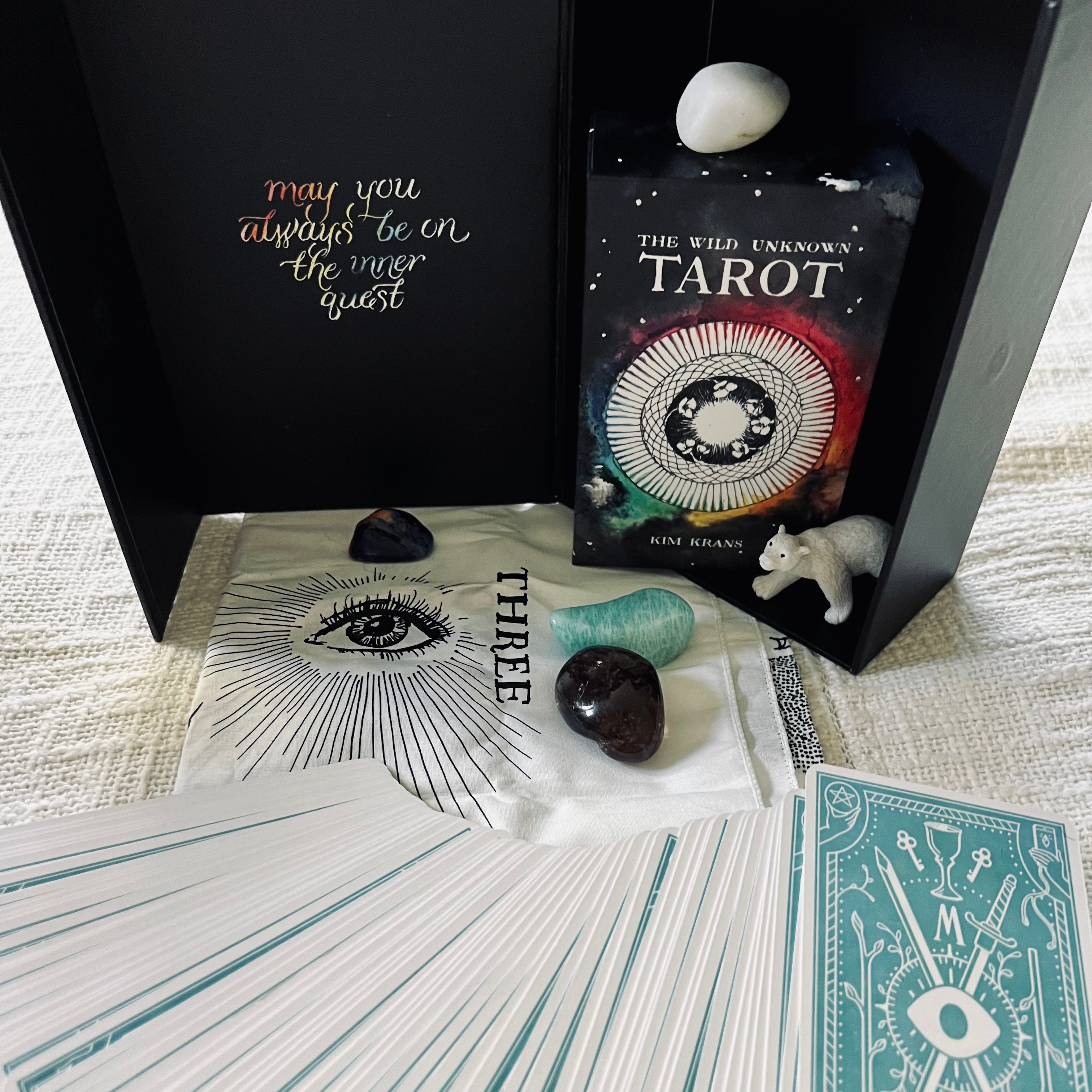
I’ve been getting back into the tarot lately. It’s been an on-and-off lifelong interest, along with other divination practices like the iChing and runes. Divination has been around for…well, forever. And while there are definitely those who become experts (or delusionally obsessed) with trying to scry the future, I like these practices because they are all a way of spending some time in self-reflection, ways of creating stories about our selves and our worlds and the people in them that help us to make sense and meaning. Human beings live in narrative - whether we are conscious of it or not, every choice we make is informed by some kind of narrative structure, from the society we live in, to our family units and dynamics, to what we decide to eat and watch and purchase.
Divination is just a way of figuring out your own story.
Like all good ideas, this tarot idea didn’t come from nowhere. Synchronicity, while overly-committed to by some and overly-skepticized by others, is actually a pretty common psychological experience, and can be useful in the same way that divination tools can help to create meaningful narratives from the insane haphazard alphabet soup that we call life.
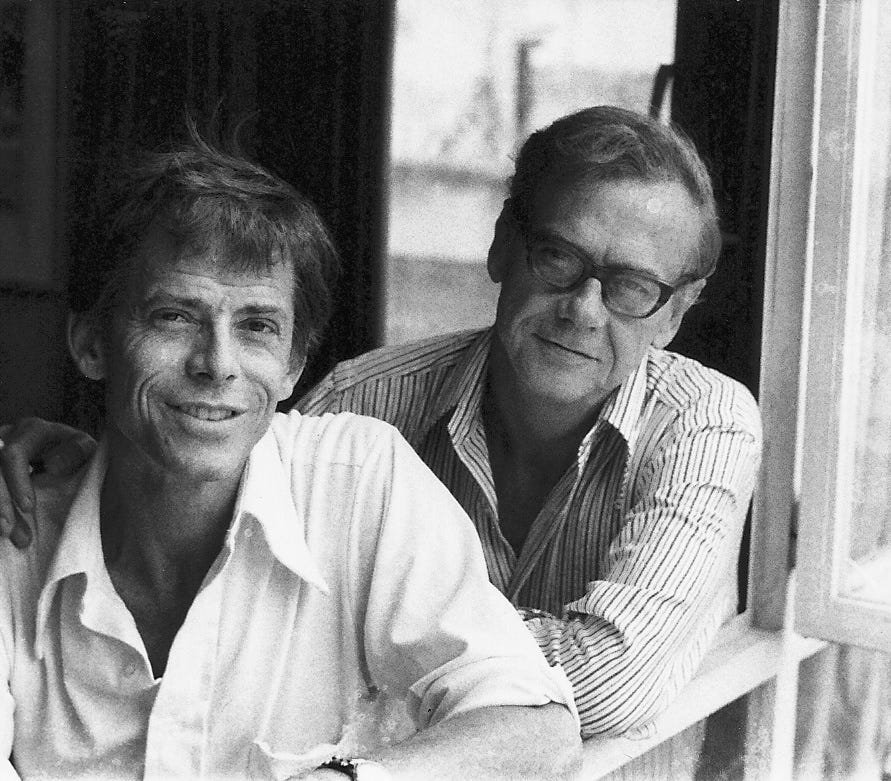
In this case, I have been reading James Merrill’s poetic opus The Changing Light At Sandover, which he wrote over several decades in the mid 1900’s.
Merrill made a surprising detour by incorporating extensive occult messages into his work (although a poem from the 1950s, "Voices from the Other World", was the first of his works to quote such "otherworldly" voices). With his partner David Jackson, Merrill spent more than 20 years transcribing purportedly supernatural communications during séances using a ouija board.
Merrill published his first ouija board narrative cycle in 1976, with a poem for each of the letters A through Z, calling it The Book of Ephraim. It appeared in the collection Divine Comedies (Atheneum), which won the Pulitzer Prize for Poetry in 1977. (Wikipedia, The Changing Light at Sandover)
And if James Merrill can win the Pulitzer Prize using a Ouiji board as a writing tool, then we can, too.
The other synchronistic event that occurred was that several of you in the class mentioned interest in tarot and astrology and suggested it as a focus for a Substack.
And I was like, Heck yeah! Great idea!
Then the lightning bolt struck, and I figured I’d share my tarot practice with you, and use it as a fun catalyst to convey some ideas about writing - my own and in general. And maybe we’ll find some prompts that you can use to get going, and I will use the composition process of my posts as examples.
First post - coming soon
I will compose the first post with you in a video, as a show-and-tell to the Substack functionality. But note also, along the way, the ways in which I am consistently circling through MAP-ping my posts for this Substack. Let’s define them.
Message: You can write from anything
Audience: You people - a group of undergraduate writing students from UCSB
Purpose: To learn how to effectively compose and communicate to specific audiences on the web, specificially Substack
First card of the class
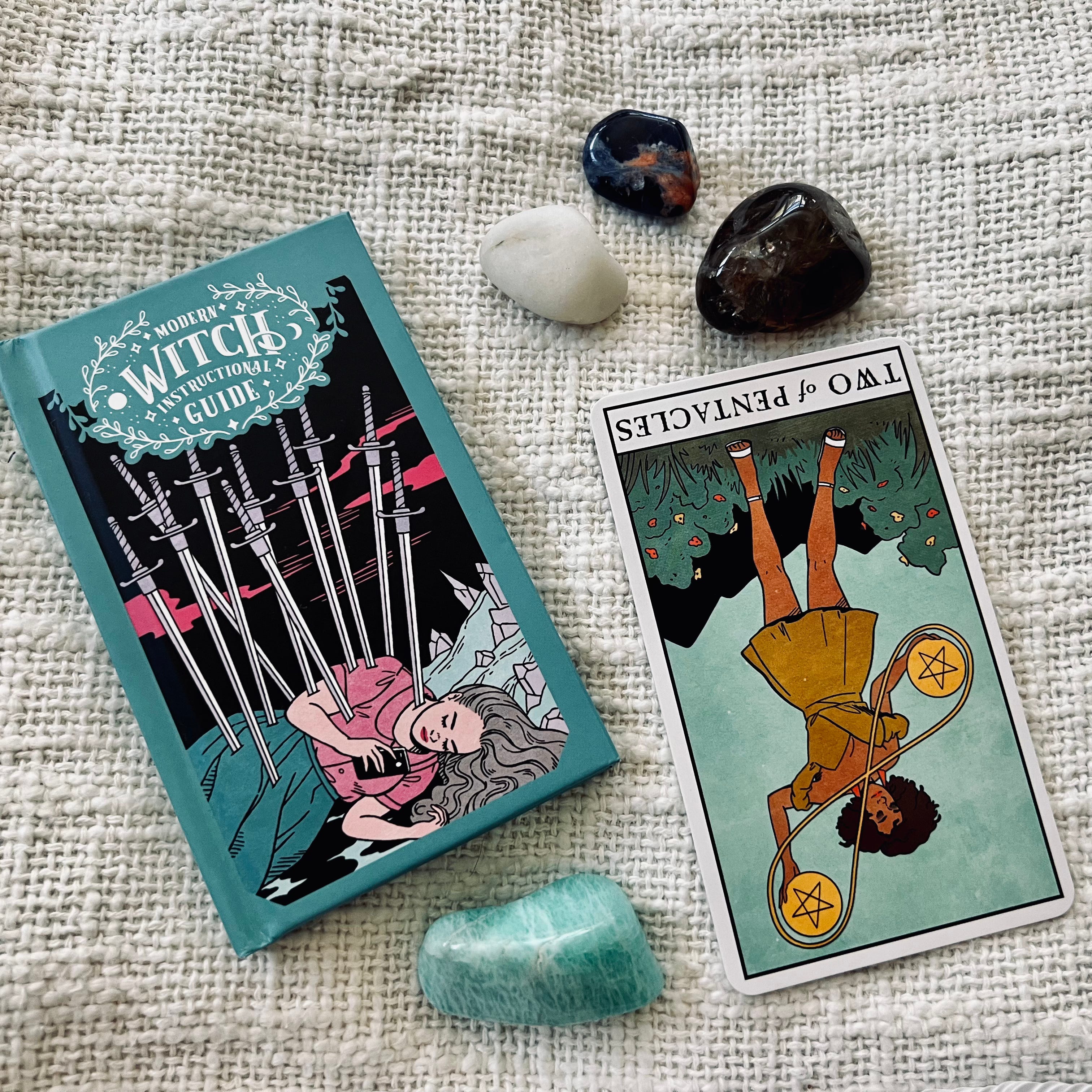
The card I pulled for today from the Modern Witch Tarot by Lisa Sterle for the class was the 2 of Pentacles. The 2 of Pentacles is a card in the Minor Arcana, which consist of four suits: Wands, Cups, Swords, and Pentacles. Each suit has its own theme. Pentacles represents Earth, and its aspects include work, finance, nature, and physical reality.
What the Modern Witch Instructional Guide that comes with the cards says is:
You’re experiencing all the busy challenges of everyday life and handling it gracefully. You’re in sync with the rhythms of the world, and every movement and decision feels like a perfectly orchestrated dance. As long as you are adaptable and flexible, you’ll be able to continue this dance.
So! First.
Pahahahahah. I don’t know if this is how you all feel, but I’m more feeling a bit the opposite, trying to pull together all the threads and strings for two full classes and get my eldest daughter off to college in Chicago for the first time and everything else of life. I do not feel like a perfectly orchestrated dance!
However! The card reflects this, as it is upside-down. Upside-down cards don’t necessarily have to mean anything, you can just turn them right-side-up, but they can if it makes sense to you. That is the reading that is done by the individual of the cards - in a way, you could say it is the writing that is done of the cards, of the narrative of the card to the situation of the asker.
So in this case, I’d say that if you all are feeling a bit less like Misty Copeland and a bit more like a Clydesdale, the card is reflecting that. But the message of the card can be read that this too is a part of life, a part of the dance. And just like Misty Copeland didn’t get to be the first African American female principle dancer with the American Ballet Company overnight, recognizing that messiness is part of the process is just as important - maybe even more so - than the pursuit of perfection.